


The Golf card game, often just called “Golf,” is a casual card game that is best played with 2-6 players. Unlike the sport, there are no clubs or balls involved here, just a standard deck of cards. The objective is to score the lowest number of points over the course of nine rounds—just like in real golf! Check out Daftar RAJAXSLOT to know more
Game Dynamics
The game is played with a standard deck of 52 cards, and each player is dealt six cards. The remaining deck is placed in the center, and the top card is turned over to start the discard pile. This setup is crucial because it sets the stage for strategic card swapping, which is the heart of the game. As players draw and discard, the dynamics of the game can change rapidly, making it an exciting challenge to keep your score as low as possible.
Players and Roles
While Golf can accommodate 2-6 players, the game dynamics shift subtly depending on the number of participants. With fewer players, the game tends to be quicker, and decisions can be more strategic due to fewer cards in circulation. With more players, the game becomes more unpredictable and lively, making each draw and discard more critical. Players must adapt their strategies accordingly, whether playing with a small or large group.
Game Variability
One of the appealing aspects of Golf is its adaptability. While the basic rules remain constant, the game can be tailored to fit the preferences and skill levels of the players. This includes introducing variations like using multiple decks or incorporating unique scoring rules. Such flexibility ensures that Golf remains fresh and engaging, no matter how often it is played. Each session can be a new adventure, keeping all players on their toes.
Basic Setup and Objective
Setting Up the Game
- Deck of Cards: Use a standard 52-card deck. If you have more than six players, consider adding another deck. This adjustment ensures that the game remains balanced and enjoyable, regardless of the number of participants. Adding another deck also introduces a new layer of strategy as players have more cards to consider.
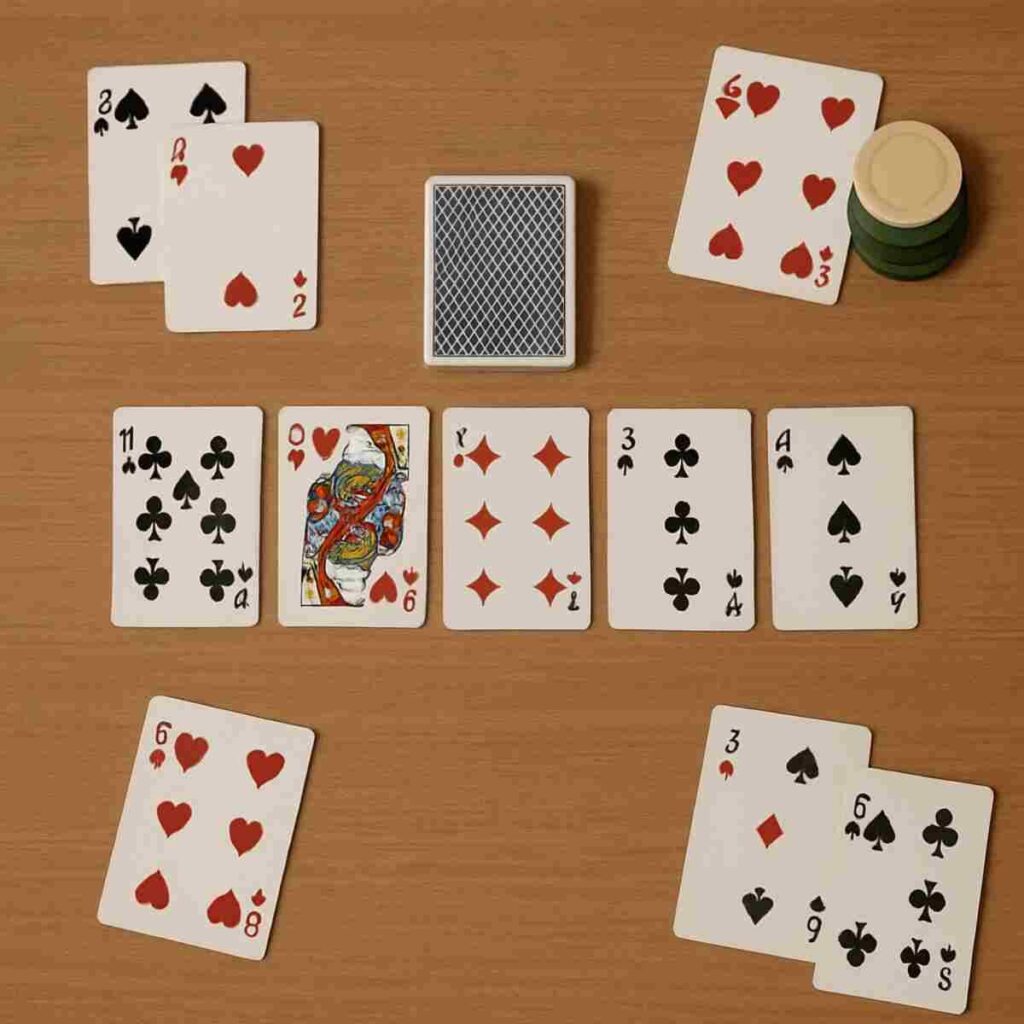
- Deal the Cards: Each player is dealt six cards, face down, and arranges them in a 2×3 grid in front of them without looking at them. This initial setup is intriguing because players start with no information about their cards, which adds an element of surprise and strategy right from the beginning.
- Start the Play: Place the remaining deck face down in the center as the draw pile. Turn over the top card to start the discard pile. This step is simple yet vital, as it establishes the foundation for all subsequent actions in the game. The draw and discard piles are central to the game’s mechanics, dictating the flow of play.
Objective
The main aim is to have the lowest score at the end of the game. Players achieve this by replacing high-value cards with lower ones. The game is played over nine rounds, with each round allowing players to swap out cards in their grid with those from the draw or discard piles.
Strategic Play
Achieving the lowest score requires a blend of luck and strategy. Players must decide when to take risks by drawing new cards or when to stick with their current grid. This decision-making process is at the core of the game’s appeal, encouraging players to think critically about each move. The balance between risk and reward keeps the game engaging and unpredictable.
Round Mechanics
Each round in Golf is a mini-game in itself. Players must adapt to changing circumstances and make the best of the cards they are dealt. The nine-round structure provides ample opportunity for players to recover from a poor round or solidify a lead. This structure ensures that the game remains competitive and exciting throughout its entirety.
Scoring Strategy
Scoring in Golf is straightforward but requires careful planning. Players must pay attention to the cards they collect and their positions in the grid. Strategically swapping cards at opportune moments can lead to significant point reductions. Understanding how to manage one’s score effectively is crucial for success in the game.
Understanding the Card Values
Knowing the card values is crucial to strategizing your moves. Here’s a quick breakdown:
Card Values Breakdown
- Aces: Aces are worth 1 point. They are low-value cards that can significantly lower your overall score if used wisely. Players often aim to collect Aces, especially in the early rounds, to build a strong foundation for their grid.
- Number Cards (2-10): Number cards are worth their face value. These cards can be both beneficial and detrimental, depending on the situation. Players must decide whether to keep or swap them based on their current grid and overall strategy.
- Face Cards (Jacks and Queens): Jacks and Queens are worth 10 points each. These high-value cards are generally undesirable and are often replaced as soon as possible to reduce the player’s score. However, they can sometimes be strategically retained if they complete a pair or column.
- Kings: Kings are worth zero points, making them the most desirable card. Players seek out Kings to minimize their score and often prioritize them in their strategies. A grid filled with Kings can lead to an unbeatable score.
- Jokers (if used): Jokers can be worth negative points, often set at -2. Introducing Jokers adds an exciting twist to the game, providing players with opportunities to significantly decrease their score. However, not all games use Jokers, so players must decide if they want to include them in their version of Golf.
How to Play the Golf Card Game
Starting the Game
- Flip Two Cards: At the start of the game, each player flips over two of their six cards. You can choose any two cards to flip. This initial revelation provides the first glimpse into your grid, informing your early strategic decisions.
- Taking Turns: The game proceeds in turns. On your turn, draw a card from either the draw pile or the discard pile. This choice is crucial, as it determines your ability to improve your grid and overall score.
- Replace or Discard: Decide if you want to keep the drawn card: If yes, replace it with one of the six cards in your grid, which you then discard. If no, place the drawn card on the discard pile without changing your grid. This decision-making process is central to the game, balancing risk and reward with each turn.
Strategy Tips
- Watch Your Opponents: Pay attention to the cards your opponents are discarding. This can give you hints about their hand and help you plan your moves. Observing their strategies can provide valuable insights into how to optimize your own gameplay.
- Aim for Kings and Low Cards: Kings are golden as they add zero points to your total. Replacing high-value cards with Kings or low cards (Aces, 2s, 3s) should be your priority. This focus on low-value cards is essential for maintaining a competitive score.
- Remember Card Positions: Try to remember the positions of your face-down cards as you reveal them. This will aid in making strategic swaps later in the game. A good memory can be a powerful tool, allowing you to make informed decisions as the game progresses.
- Adapt to Changing Circumstances: The dynamic nature of Golf requires players to adapt their strategies based on the cards they draw and discard. Flexibility and quick thinking are key to staying ahead of the competition.
- Balance Risk and Reward: Each decision in Golf involves weighing potential risks against possible rewards. Successful players know when to take calculated risks and when to play it safe, ensuring the best possible outcome.
Ending the Round
The round ends when one player has all their cards face-up. At this point, the other players get one more turn to flip or swap their cards. Once everyone has had their last turn, scores are tallied based on the cards facing up.
Final Moves
The final moves of a round are crucial for maximizing your score. Players must carefully consider their options, deciding whether to swap cards or stick with their current grid. These last decisions can often determine the outcome of the round, making them highly strategic.
Scoring and Tallying
Once the round ends, players must tally their scores based on the cards in their grid. This process is straightforward but requires attention to detail to ensure accuracy. Understanding the scoring system is essential for success in Golf.
Preparing for the Next Round
After scores are tallied, players must prepare for the next round. This involves resetting the grid and shuffling the deck, ensuring a fresh start for all participants. The transition between rounds provides an opportunity to reflect on past strategies and plan for future success.
Scoring and Winning the Game
Calculating Scores
- Add Up the Values: Add up the values of all face-up cards in each player’s grid. This calculation is the basis for determining each player’s score for the round.
- Round Score: A round’s score is the total of these values. Players must aim to keep this number as low as possible to maintain a competitive edge.
- Winning the Game: The player with the lowest total score after nine rounds wins! This overall goal provides a clear target for players to work towards throughout the game.
Special Scoring Rules
- Pairs: If you have a pair of the same card in a column, it scores zero points. This rule adds an extra layer of strategy, encouraging players to form pairs whenever possible.
- Negative Jokers: If playing with Jokers, remember they subtract points from your total. Jokers can be a game-changer, providing significant advantages to players who use them wisely.
- Strategic Scoring Decisions: Players must carefully consider their scoring strategies, balancing the benefits of forming pairs and using Jokers against the risks of high-value cards.
Celebrating the Winner
Winning in Golf is a rewarding experience, celebrating both skill and strategy. Players should take the time to acknowledge the victor, appreciating the effort and thought that went into their gameplay. This celebration adds to the fun and camaraderie of the game, making it a memorable experience for all involved.
Variations and House Rules
While the traditional rules are fun, you can try these variations to spice things up:
Four-Card Golf
- Quicker Game: Play with four cards instead of six for a quicker game. This variation is perfect for shorter sessions or when time is limited.
- Increased Pace: The reduced number of cards increases the pace of the game, making each decision more impactful and exciting.
- Strategic Adjustments: Players must adjust their strategies to accommodate the smaller grid, leading to new and interesting gameplay dynamics.
Play with Jokers
- Negative Points: Introduce Jokers for negative points or as wild cards. This addition can drastically change the game’s dynamics, providing new opportunities for strategic play.
- Wild Card Dynamics: As wild cards, Jokers add unpredictability to the game, requiring players to adapt their strategies on the fly.
- Enhanced Excitement: The inclusion of Jokers adds an element of surprise and excitement, keeping players engaged and entertained throughout the game.
Custom Scoring
- Adjust Scoring Values: Adjust the scoring values for specific cards to make the game more challenging. This customization allows players to tailor the game to their preferences and skill levels.
- Increased Complexity: By modifying the scoring system, players can introduce new levels of complexity and strategy to the game.
- Personalized Gameplay: Custom scoring ensures that each session of Golf is unique, providing endless possibilities for fun and enjoyment.
Final Thoughts
The Golf card game is a delightful mix of luck and strategy, making it a great way to unwind. By keeping the rules simple and easy to remember, you can focus on having fun and enjoying the company of your fellow players. So grab a deck of cards, gather your friends, and let the games begin! Whether you’re playing casually or with a competitive edge, Golf is sure to be a hit at your next game night.
Emphasizing Fun and Relaxation
Golf is designed to be a relaxing and enjoyable experience, perfect for unwinding with friends and family. The game’s simplicity allows players to focus on the fun and camaraderie, rather than getting bogged down in complex rules.
Encouraging Social Interaction
The social aspect of Golf is one of its greatest strengths. The game provides an opportunity for players to interact, share laughs, and create lasting memories. Whether played casually or competitively, Golf fosters a sense of community and connection.
Continuous Learning and Improvement
Each session of Golf offers players the chance to learn and improve their strategies. The game’s dynamic nature ensures that there is always something new to discover, keeping players engaged and motivated to continue playing.
Remember, the key is to keep your score low and enjoy the process—happy playing!